Author: Rig

United Arab Emirates
Blessed with immense oil and gas resources, the United Arab Emirates has leveraged its hydrocarbon endowment to drive rapid economic growth since the first commercial discoveries in the late 1950s. Several prolific basins were found to contain substantial petroleum reserves, establishing the UAE as a leading Middle East producer over the following decades. Massive onshore fields were uncovered in Abu Dhabi, along with giant offshore discoveries just miles from the coast. Neighboring Dubai also benefited from sizable oil and gas finds providing energy for development. Continuous investment and technology application maintained high production levels for decades. However, after years of sustained output, the UAE's fields are maturing and facing natural decline. Enhanced recovery techniques are critical to boosting reserves from these aging assets. Operators also look to deeper formations and previously untapped accumulations to offset falling legacy production. This article provides an overview of the UAE's oil and gas basins and development history. While no longer at peak levels, the application of breakthrough technologies and innovative approaches can maximize the country's remaining hydrocarbon potential. The UAE provides lessons on achieving resource security, economic prosperity and production sustainability derived from its petroleum endowment.

United Kingdom
The United Kingdom has leveraged its offshore hydrocarbon resources in the North Sea and Atlantic Margin to become a leading oil and gas producer since the 1960s. Several prolific petroleum basins were discovered off the UK coast containing major light oil and natural gas fields that powered domestic supply and exports. Key producing regions include the northern and central North Sea, hosting mature giant assets operated by companies like BP, Shell, and TotalEnergies. The Atlantic frontier has upside around the Shetland Islands, despite harsh conditions. While many fields are now declining, production remains around 1 million barrels of oil equivalent per day. New technologies and redevelopment of older fields sustain output. The UK Continental Shelf retains substantial potential to support the country's economy and energy needs.
Priobskoye Field
The Priobskoye oil field in northwest Siberia is one of Russia's largest and most important petroleum assets. Discovered in 1982, Priobskoye quickly became a giant field producing close to 1 million barrels per day at its peak in the late 1980s. Its development marked a major chapter in the USSR's drive to maximize oil production. Over 1 billion barrels have been extracted from Priobskoye to date, demonstrating the immense resources of Russia's West Siberian Basin. While now mature after years of production, enhanced recovery techniques continue to maintain substantial output. Priobskoye remains a vital part of Russia's top producing region. This article provides an overview of Priobskoye's discovery, rapid production buildup, and current status as a key asset for Russia. The giant field exemplifies the nation's commitment to fully develop its prolific but often challenging oil resources in remote areas through technology and determination.
West Siberian Basin
Spanning over 1.5 million square kilometers in western Russia, the West Siberian Basin is one of the largest petroleum basins on earth. The extensive sedimentary basin has driven Russia’s oil production since the 1960s, when huge oil fields were discovered across the remote wilderness of Western Siberia. Development of megafields like Samotlor transformed the Soviet Union into one of the top oil producing nations globally. Peak output surpassed 6 million barrels per day by the 1980s as more giant fields came online. While now mature after decades of production, the West Siberian Basin still yields over 5 million barrels daily. This article provides an overview of the history and status of this prolific basin that has powered Russia’s petroleum industry for over 50 years. From early risky exploration to mass development of giant fields and today’s application of new technologies, the West Siberian Basin remains integral to Russia’s energy sector. Maintaining output through enhanced techniques will be critical for the future.

Russia
With some of the most prolific petroleum basins on earth, Russia has utilized its vast oil and gas resources to become one of the world's leading energy powers. Several key regions across the expansive country contain giant and supergiant fields that have supplied immense production for decades. Major basins include West Siberia, which drove the Soviet Union's oil boom after discovery in the 1960s. The Volga-Urals and Timan-Pechora regions host mature fields that came online in earlier development phases. And remote areas like Eastern Siberia and Sakhalin Island provide frontier hydrocarbons. Russia's state-run and private energy firms continue to maximize output from these hydrocarbon-rich basins through multi-billion dollar investments. Enhanced recovery, Arctic development, and new technologies are key focuses for the future. This article provides an overview of Russia's prolific petroleum regions and development history.
Erawan Field
The giant Erawan gas field offshore Thailand has served as the cornerstone of the country's tremendous rise as a major petroleum producer over the past five decades. Discovered in 1971, Erawan was the first in a series of prolific natural gas finds in the Pattani Basin that transformed Thailand's energy security and economy. Favorable conditions enabled the swift development of Erawan in the 1970s. Since start-up, the field has produced over 11 trillion cubic feet of gas, meeting up to a quarter of Thailand's domestic demand at its peak. While now mature after years of production, Erawan remains a vital part of the country's gas supply today. This article provides an overview of Erawan's discovery, peak production history, current status, and significance for establishing Thailand as a regional energy power. Operated throughout by multinational companies, the supergiant field highlights how Thailand capitalized on its natural gas reserves to serve national development. Continuous enhancements keep Erawan delivering key volumes as the country's first and largest offshore gas project.

Thailand
Thailand joined the ranks of oil and gas producing nations in the 1960s with the discovery of major natural gas fields in the Gulf of Thailand. Early offshore exploration and development established the country as a regional energy player. Sustained activity over subsequent decades expanded production from additional basins and reservoirs. Today, Thailand derives significant domestic energy supply from its network of offshore assets. This article provides an overview of how Thailand built up its hydrocarbon production base over the past half century. Beginning with pioneering exploration efforts in the 1960s, Thailand witnessed increasing investment and drilling activity both in shallow and deepwater zones. Natural gas served as the main output, meeting surging domestic demand. The emergence of the country as an oil producer further bolstered energy security. Thailand's hydrocarbon basins continue to provide substantial resources through the application of improved recovery techniques. With mature fields now prevalent, efforts are underway to prolong output through new licensing and continued technological innovation. The following review highlights the growth of Thailand into a self-sufficient petroleum nation.
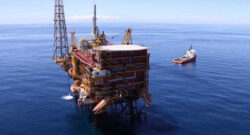
Peregrino Field
Located 80 kilometers off the coast of Rio de Janeiro state, the Peregrino oil field represents an ambitious heavy oil development by Brazilian state oil company Petrobras. The unique technical challenges faced at Peregrino provide insights into producing viscous offshore crude. This post takes a look at the history and current status of one of Brazil's pioneering heavy oil projects.
- 1
- 2