Author: Rig

Brazil
Brazil, a country known for its vibrant culture and stunning landscapes, is making headlines for another reason: its booming oil and gas industry. With a vast offshore oil reserve, innovative exploration techniques, and strategic investments, this South American giant is rapidly becoming an influential player in the global energy sector.
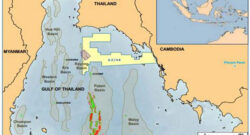
Pattani Basin
Located in the Gulf of Thailand, the Pattani Basin has been a significant contributor to the country's oil and gas production since the 1960s. Though small in size compared to prolific basins in the Middle East and elsewhere, the Pattani Basin helped establish Thailand as a hydrocarbon producer through the development of major offshore gas fields. Sustained activity led to the Basin reaching peak output by the early 2000s before maturation and decline set in. The shallow water Pattani Basin was an early offshore success for the region. Initial exploration in the 1960s by foreign companies revealed sizable natural gas reservoirs accessible from fixed platforms. This galvanized Thailand's nascent offshore industry and led to billions of cubic feet of gas production over subsequent decades. Further investment and drilling brought additional discoveries and enabled the maximum development of resources. In recent years, focus has shifted to boosting oil output and applying advanced recovery methods to prolong the life of Pattani Basin assets. Though production has waned from peak levels, the Basin still supplies vital domestic gas and oil volumes today. Operators continue to leverage technology to optimize the mature fields. This article provides an overview of the exploration history, development milestones, and current status of the Pattani Basin. The story highlights how this offshore area helped launch Thailand into the ranks of oil and gas producing nations in the region. While its best years may be behind, the Basin remains an important part of the energy supply portfolio.
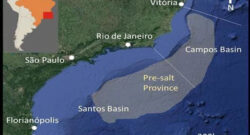
Campos and Santos Basin
Located off the southeast coast of Brazil, the Campos and Santos Basins have emerged as prolific petroleum systems that have transformed the South American nation into a major global oil producer. Together the offshore basins account for over 80% of Brazil's total oil production and reserves, spearheading growth in the country's energy sector. The Campos Basin, discovered in the 1970s, was Brazil's first major offshore success. Lease sales and exploration offshore attracted foreign oil companies to operate alongside national oil company Petrobras. Several giant oil fields were uncovered in the 1980s and 1990s, establishing the Campos Basin as a core producing area. Further south, the Santos Basin has taken over as Brazil's primary offshore region. Major pre-salt oil deposits found in the 2000s offshore São Paulo state have led to rapid production growth from ultra-deep wells. Advanced drilling and production technologies have been utilized to tap into the extremely promising geology. This article provides an overview of the history, current operations, and outlook for these two critical offshore basins. While the mature Campos Basin requires enhanced recovery techniques to maintain output, the Santos Basin promises to supply Brazil with substantial oil production for decades to come. The story of oil development offshore Brazil provides insights into unlocking complex deepwater petroleum resources.
- 1
- 2